

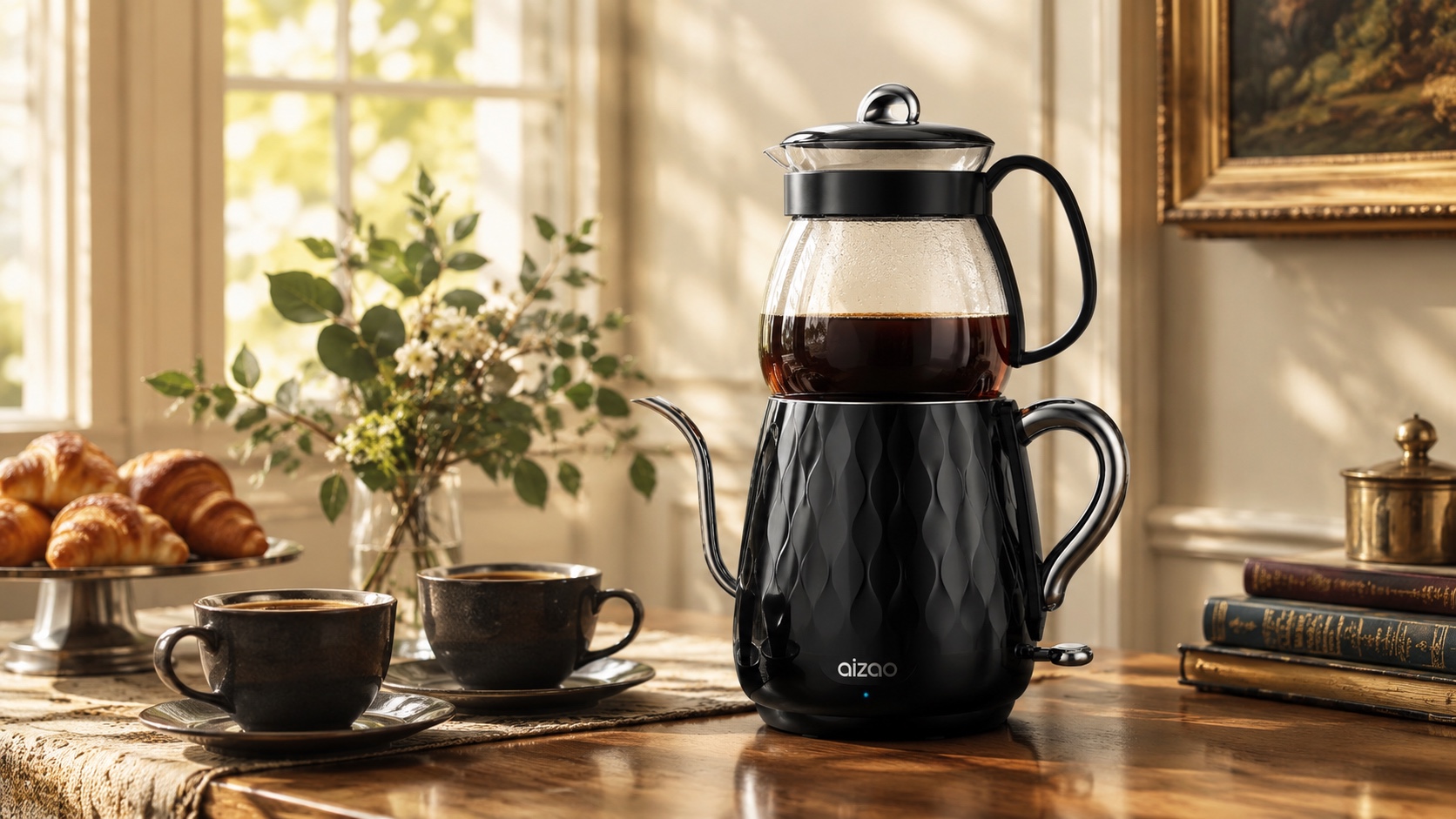
If you are sourcing small appliances from China, two acronyms will come up in every factory conversation: OEM and ODM. They look similar on a quotation sheet. In practice, they change what you pay, how long you wait, how much you can customize — and who owns the product when the relationship ends.
This guide explains how OEM and ODM actually work on the factory floor, so you can choose the right model before you commit tooling money or sign a purchase order.
What OEM Means in Small Appliance Manufacturing
OEM stands for Original Equipment Manufacturing. You bring the product definition — your own design, or an existing platform you select — and the factory builds it to your specification, under your brand.
A typical OEM project for an electric kettle looks like this: you select a proven 1.7L or 1.8L platform, then define the branding (logo printing or laser engraving), housing colors matched to your Pantone references, retail packaging and multilingual manuals, plug and voltage for your target market, and minor functional adjustments such as a different thermostat or a keep-warm function.
The factory executes. You — or your design partner — own the product definition. Tooling you pay for is typically yours, which matters more than most first-time buyers realize. We will come back to that.
OEM suits brands that need differentiation. If your kettle has to look and feel different from the ten other kettles on the same retail shelf, OEM is the route.
What ODM Means
ODM stands for Original Design Manufacturing. The factory designs and develops the product; you sell it under your brand.
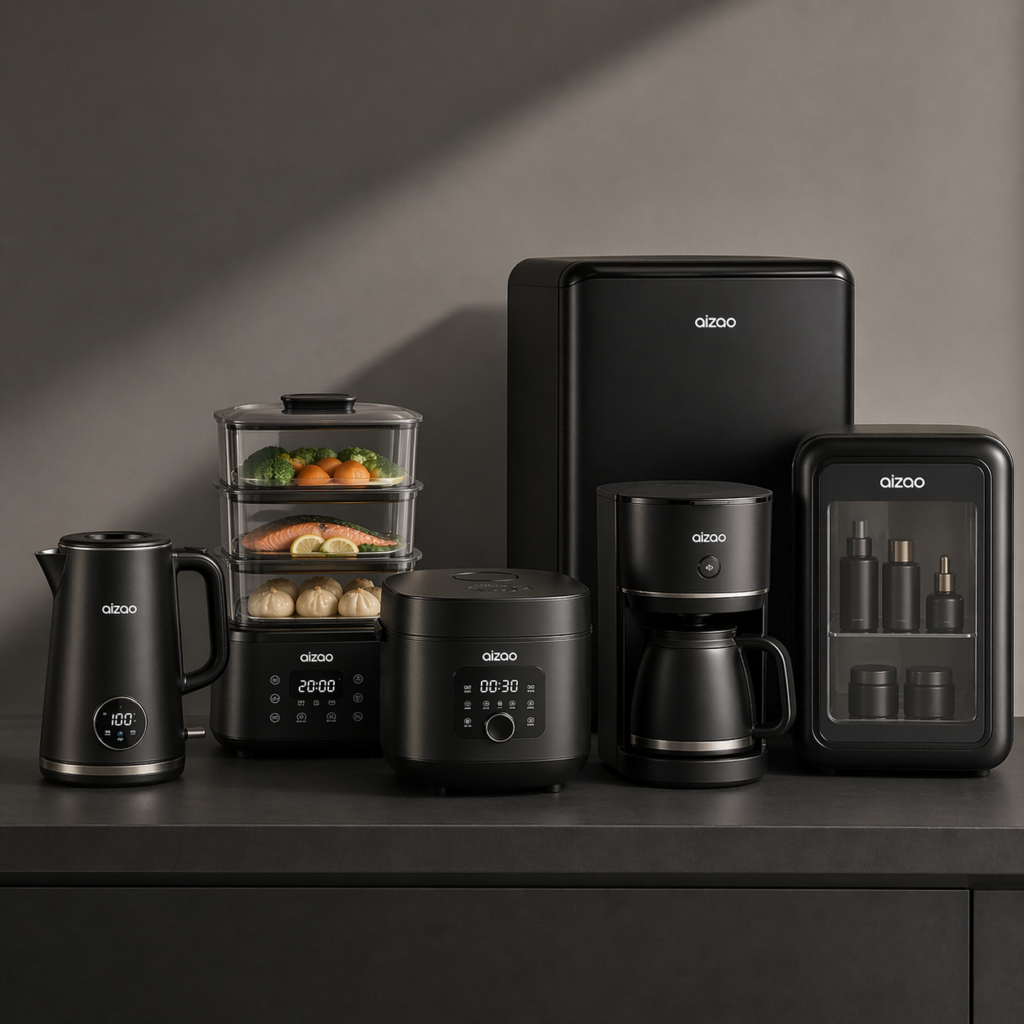
In the ODM model, you browse the factory’s existing catalog, pick a model, add your logo and packaging, and place the order. The factory owns the design and the tooling. Other brands may sell the same — or nearly the same — unit in different markets.
The trade is straightforward: you get to market fast, with almost no development cost. You give up exclusivity and deep customization.
5 Differences That Actually Affect Your Business
1. Who owns the design — and the tooling
This is the one buyers overlook, and the one that hurts later.
In OEM, tooling paid for by you is normally your property. If you move to another factory, you take the molds. Get this in writing before production — a simple clause in your agreement stating that buyer-funded tooling belongs to the buyer.
In ODM, the factory owns everything. If you leave, you leave the product behind. That is acceptable when speed matters more than ownership, but do not discover it mid-dispute.
2. MOQ and unit cost structure
ODM usually wins on minimum order quantity. Because the factory already amortized development across multiple buyers, MOQs can start as low as a few hundred units for standard models, and the unit price reflects shared tooling costs.
OEM costs more upfront: custom tooling, custom packaging plates, sometimes custom certifications. Unit prices can end up lower at scale — a dedicated production run with no design royalties is efficient — but the entry ticket is higher. As a rough rule, expect OEM tooling for a small appliance to add anywhere from a few thousand to tens of thousands of dollars before the first mass-production unit ships, depending on how much is truly custom.
3. Lead time from brief to shipment
ODM is fast. For a catalog model with only logo and packaging changes, sampling takes days and mass production typically ships in 30–45 days.
OEM takes longer. New tooling alone can add 30–60 days, plus rounds of sample confirmation. A realistic OEM timeline from approved brief to shipment is 90–120 days for a moderately customized product. Plan your retail calendar backwards from that.
4. How deep customization goes
ODM customization is surface-level: logo, colors from the factory’s existing options, packaging, plug type. Ask for a structural change and you are effectively asking for an OEM project — the factory will quote you accordingly.
OEM goes as deep as your budget allows: housing geometry, control panels, heating elements, cord sets, packaging engineered around your retail channel. If your market needs a specific certification the base model lacks — say, ETL for North America on top of CE — OEM is where that gets built in.
5. Your risk if the relationship ends
With ODM, switching factories means re-qualifying a new product. Your listings, reviews, and packaging may all need rework.
With OEM — provided you secured tooling ownership — you can move the molds and keep selling the same product. That portability is the quietest, most valuable part of the OEM model, and it is worth paying for if you plan to build a brand rather than test a SKU.
Which Model Fits Your Brand?
Choose OEM if you check most of these boxes:
- You need the product to look or perform differently from competitors
- You have (or will commission) a design, and you want to own it
- Your volumes justify tooling investment — typically thousands of units per SKU per year
- You are building a brand for the long term
Choose ODM if these sound more like you:
- Speed to market beats differentiation right now
- You are testing a category before committing capital
- Your order volumes are modest and you want low MOQs
- The factory’s existing design already fits your positioning
Many successful brands do both: launch with ODM to validate demand, then move the winners to OEM for differentiation and margin. There is no rule against starting simple.
How the Process Works With AizaoMfg
Whether you come with a full tech pack or just a product idea, the route is the same: share your brief, we review requirements against the selected platform and your target market, you confirm samples, then we move through production, QC checks, and export shipment. The full workflow is laid out on our OEM/ODM partnership page.
If you are unsure which model fits, send the category and your target market — we will tell you honestly whether your brief needs OEM or whether an ODM platform gets you there faster and cheaper.
Frequently Asked Questions
Yes. A common path is to launch with an ODM catalog model, validate sales, then develop an OEM version with your own tooling once volumes justify it.
In a proper OEM agreement, buyer-funded tooling belongs to the buyer. Confirm this in writing before production starts — do not rely on verbal assurances.
ODM orders for standard models can start at a few hundred units. OEM minimums are higher because the factory sets up dedicated tooling and production; expect requirements in the low thousands per SKU, varying by product complexity.
For ODM with logo-only changes, a few days. For OEM with new tooling, allow several weeks including at least one or two sample revision rounds.
Not necessarily. You can start from one of our existing platforms and customize from there — many OEM projects begin as a platform plus modifications rather than a from-scratch design.
Ready to discuss your project? Request a quote — tell us the category, target market, and estimated volume, and our team will recommend the right OEM/ODM path.
Pingback: How to Private Label Small Appliances: A Step-by-Step Guide for Brands - AizaoMfg