The global electric kettle market was valued at approximately $9.95 billion in 2025 and is projected to reach $17.53 billion by 2033, growing at a compound annual growth rate of 7.34%, according to a recent industry report by Future Market Report. For brands, distributors, and importers in the small appliance space, these numbers deserve more than a passing glance — they point to where demand is concentrating and what product decisions will matter over the next several years.
Where the Growth Is Coming From
China leads with a 15.4% share of the global market, making it both the largest single-country market and the center of manufacturing gravity. The Asia-Pacific region as a whole holds 38.7% and is the fastest-growing region. This matters for sourcing strategy: the factories with the deepest tooling libraries, the most mature supply chains for heating elements and controllers, and the shortest lead times on kettle components are concentrated exactly where demand is growing fastest.
By capacity segment, medium-capacity kettles dominate with 42.3% of global revenue. In practical terms, this is the 1.0–1.8 liter range — the household workhorse size. If you are building a kettle lineup, this is the segment where volume lives. Below-1-liter models serve travel and single-serve niches; above-2-liter models skew commercial. The middle is where most purchase decisions happen.
The Trends Reshaping Buyer Expectations
The report highlights several shifts that directly affect what importers should be specifying:
Temperature control is moving from premium to expected. Variable temperature settings — once a differentiator for high-end models — are increasingly standard buyer requests, driven by tea and specialty coffee consumption. If your 2026–2027 roadmap doesn’t include at least one temperature-control SKU, you’re behind the curve.
Smart and connected features are gaining, but selectively. App control and voice assistant compatibility are growing, but adoption remains concentrated in developed markets and premium tiers. For most mid-market programs, the smarter investment is still in core performance: boil speed, temperature accuracy, and keep-warm stability.
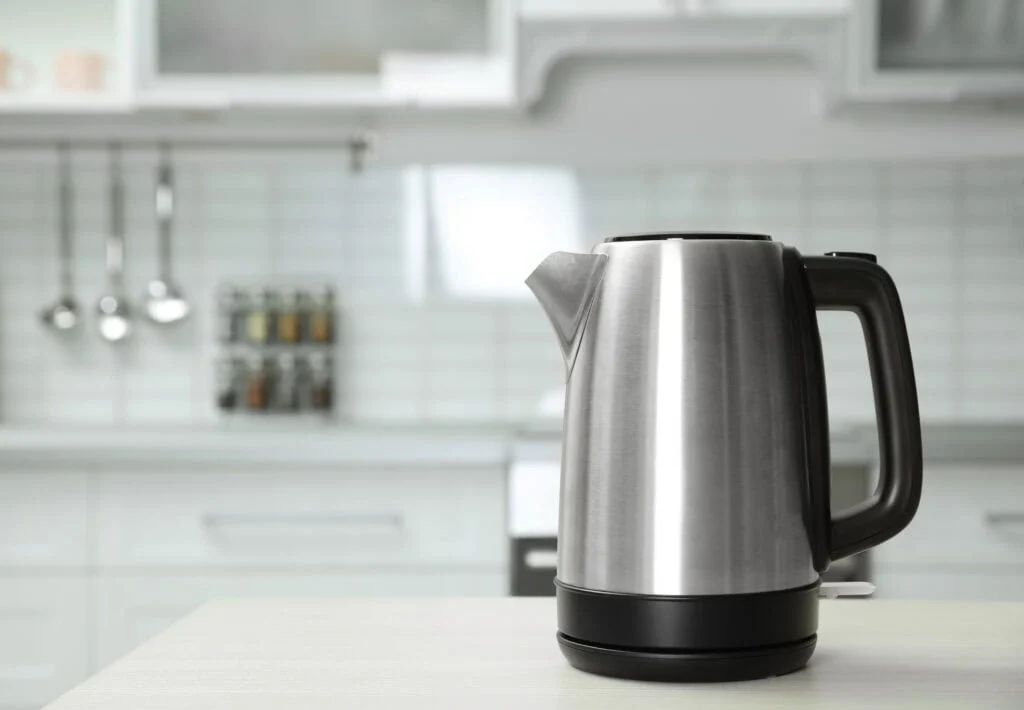
Materials and sustainability matter more at the buying desk. Stainless steel remains the dominant product type, with glass gaining in design-led segments. Buyers are asking more pointed questions about food-grade materials, BPA-free plastics, and energy efficiency — not as marketing checkboxes, but as compliance and liability concerns.
Safety certification is the real gatekeeper. The report notes that varying electrical standards and safety regulations across regions directly impact market penetration. This is the unglamorous truth of the kettle business: a great design means nothing without the right certifications for your target market — CE, UL/ETL, GS, UKCA, SAA, or CCC depending on destination.
What This Means for Your Sourcing Strategy
A $17.5 billion market growing at 7%+ annually means two things simultaneously: more opportunity and more competition. Here’s how to position:
1. Lock in medium-capacity tooling now. With 42.3% of revenue in this segment, the factories with the best medium-capacity platforms — proven heating element integration, reliable thermostat/PCB supply, mature plastic and steel tooling — will be the most valuable partners. Ask potential suppliers what their highest-volume kettle platform is and how many units it has shipped. Volume history is the most honest quality signal in this industry.
2. Specify for your market’s voltage and certification from day one. The report segments by 110–120V and 220–240V for a reason. Designing for the wrong voltage range and retrofitting later is expensive. A good OEM partner will ask about your target markets before quoting — if they don’t, that’s a red flag.
3. Don’t over-invest in smart features for mid-market. The data shows smart kettle adoption is real but concentrated. For most programs, buyers get better ROI from nailing the fundamentals: fast boil, accurate temperature control, durable construction, and clean industrial design. Add connectivity only when your retail channel and price point support it.
4. Plan for the Asia-Pacific supply base. With the region holding nearly 40% share and growing fastest, the component ecosystem — heating elements, controllers, switches — is deepest there. This translates to better pricing, shorter lead times, and more engineering support than sourcing the same bill of materials elsewhere.
About AizaoMfg
AizaoMfg is a China-based manufacturer specializing in small kitchen appliances, with electric kettles as a core category alongside rice cookers, multi-cookers, and Turkish coffee makers. We work with brands, distributors, and importers across Europe, North America, the Middle East, Russia, and Africa on OEM and ODM programs.
Our kettle platforms cover the volume segments the market data points to — medium-capacity stainless steel and glass models with temperature control, keep-warm function, and full safety certification support for major destination markets. Whether you need a proven platform with your branding or a custom development from industrial design through tooling, we build to your market’s voltage, certification, and cost targets.
If you’re planning your 2026–2027 kettle lineup against this market backdrop, contact us to discuss your specifications. The market is growing — the question is whether your supply chain is positioned to grow with it.
Market data sourced from Future Market Report, “Electric Kettle Market (2026–2033)” — global market valued at USD 9,950.75 million in 2025, projected USD 17,530.40 million by 2033, CAGR 7.34%.