

A 2026 roundup of the eight best beauty fridges for skincare makes one thing clear: this category has grown up. The winner, a 4L thermoelectric unit, took the top spot largely on the strength of one number — roughly 31 decibels of operating noise. Not capacity, not price. Quiet.
That tells you where the bar sits now. If you’re a brand planning a private-label skincare fridge, the products already winning shelf space define the spec sheet your factory has to beat. Here’s what the current best-sellers have in common, and what it means for sourcing.
Three specs that now decide the category
1. Noise is the headline spec. Across the 2026 list, advertised noise runs from 25 dB to 40 dB, and the quietest models rank highest. That makes sense: a beauty fridge lives on a bedroom vanity or a nightstand, running all night a few feet from someone’s head. Thermoelectric (semiconductor) cooling dominates the list precisely because it has no compressor — no hum, no vibration, nothing to maintain. The trade-off is real, though: thermoelectric tops out at a fixed delta below ambient temperature (typically around 15°C), and it struggles in hot rooms without ventilation. For skincare storage, that delta is plenty. For anything needing true refrigeration, it isn’t.
2. The LED mirror is no longer a bonus. Dimmable LED mirrors appear on most of the top picks. The fridge has stopped being a box that happens to sit in a bedroom — it’s being designed as vanity furniture. That changes the engineering: a mirrored door means wiring through the hinge, touch controls for the light, and a door assembly with more parts and more failure points than a plain lid. When you evaluate a factory, ask how they handle that sub-assembly, not just the cooling module.
3. 4L thermoelectric is the default format. Nearly every pick is a 4-liter unit with dual cooler/warmer modes and AC/DC dual power (wall outlet plus 12V car adapter). It’s the format the market has standardized on: big enough for a daily routine of serums and creams, small enough for a desk. The warmer function — up to about 65°C on some models — is a checkbox feature for most buyers, but it does complicate the control board.
What this means if you’re sourcing
Translate the retail trends into factory questions:
- Ask for noise in dB, measured at one meter. “Quiet” on a spec sheet means nothing. The 2026 winners publish 25–40 dB; make your supplier do the same, and ask under what ambient conditions.
- Ask about temperature stability, not just the delta. “15°C below ambient” is a best-case number. What matters for vitamin C serums and peptides is how far the interior drifts when the room hits 30°C.
- Price the mirror separately in your head. LED-mirror doors add meaningful assembly cost and a separate QC step. If your positioning is entry-level, a clean non-mirror design (like the list’s top pick) is a legitimate cost-down path.
- Pick your capacity lane deliberately. The 4L segment is crowded and price-driven. Larger formats — 10 to 12 liters — serve buyers with full routines, salon back-bars, and hotel amenities, with far less direct competition.
A note on who makes these
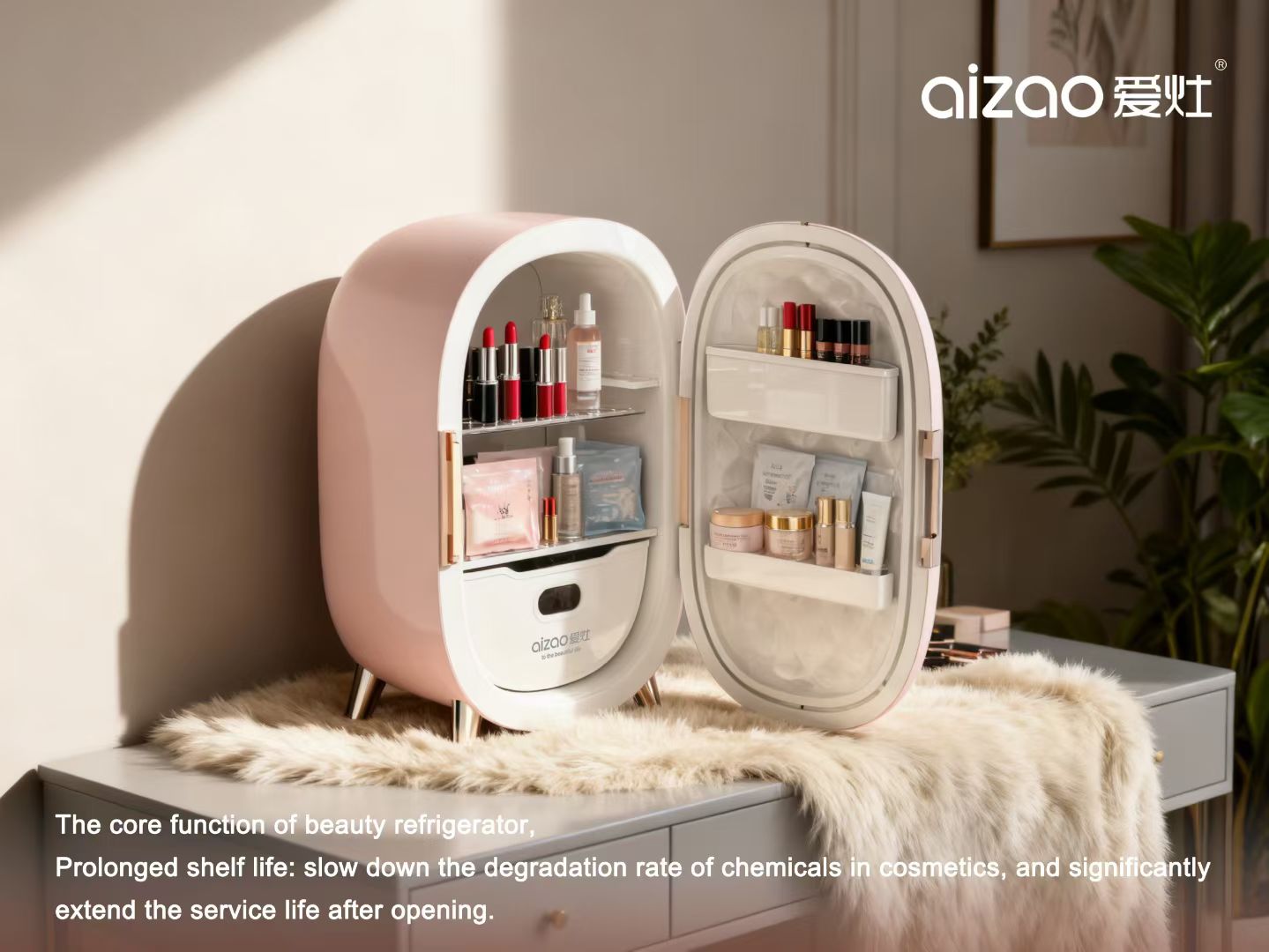
AizaoMfg has been manufacturing small appliances for the global market, and beauty fridges are an established part of the lineup — not a sideline. The current 12L Electronic Beauty Fridge 101 runs on semiconductor cooling (up to 15°C below ambient), a 12V/4A DC input, a touch display with real-time temperature readout, and built-in LED illumination in an ABS housing. It sits in that larger-capacity lane: room for a full skincare routine plus the kinds of professional products — cold masks, repair essences, photon-gel — that a 4L box can’t hold.
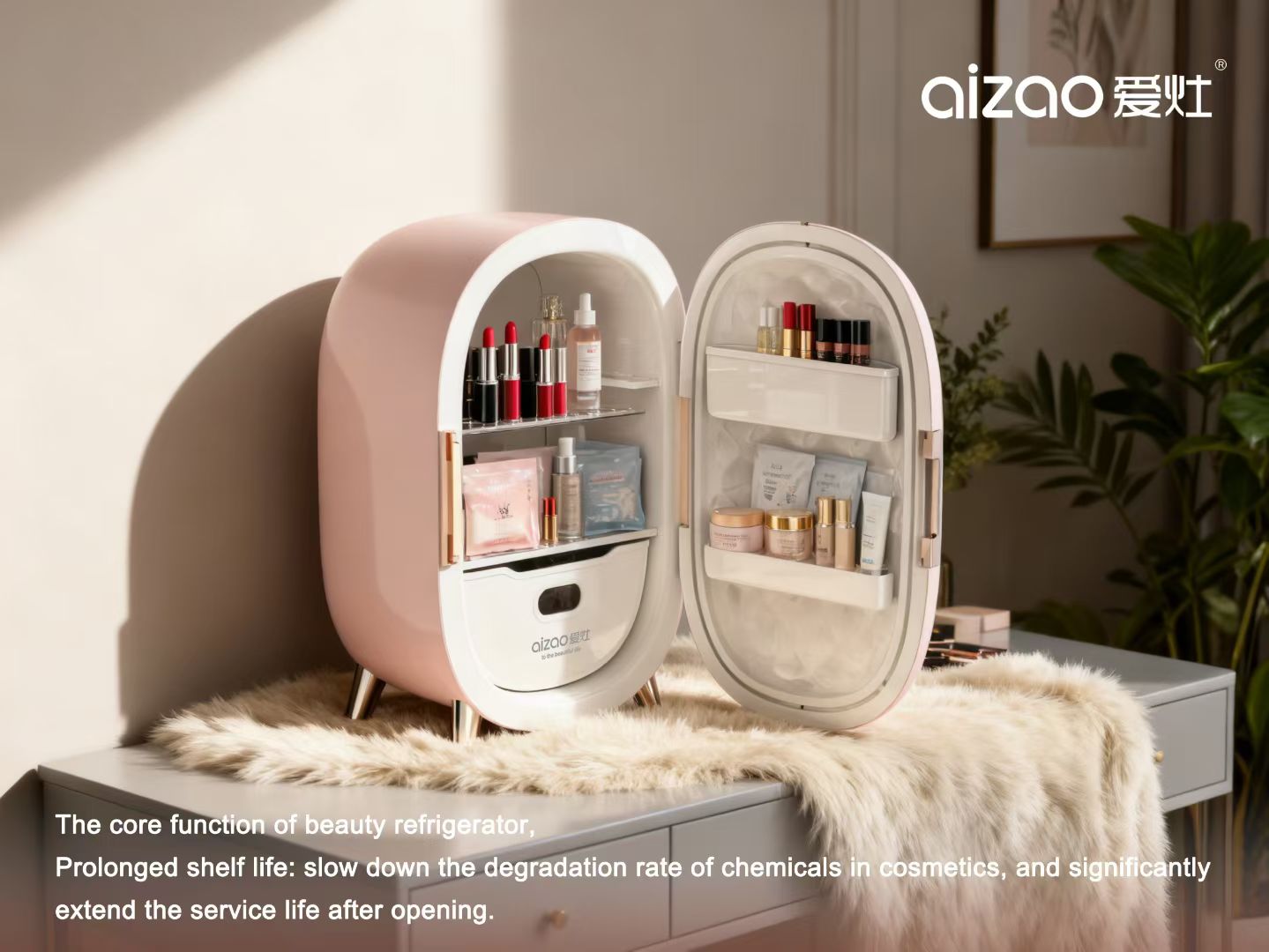
For OEM/ODM programs, the levers are the usual ones that actually move retail performance: housing color and finish, display and lighting configuration, and packaging. If the 2026 lists prove anything, it’s that the winners are decided on noise, light, and finish — all things set at the factory, not in marketing copy.
FAQ
Thermoelectric for anything going in a bedroom: silent, vibration-free, and maintenance-free. Compressor only makes sense if you need sub-ambient temperatures far below what a Peltier module can hold — which skincare doesn’t.
The 2026 best-sellers cluster at 25–40 dB. Under 35 dB is effectively inaudible in a quiet bedroom. Get the number measured, in writing, at a stated distance.
For most skincare brands, no — it’s rarely the reason anyone buys. It adds board complexity and power draw. Skip it unless your product story needs it.
Noise level in dB, temperature performance at your target market’s typical room temperature, the mirror/door sub-assembly QC process, and certifications for your destination market. Then lock packaging — beauty fridges ship as gifts as often as appliances.
Looking at a private-label beauty fridge? Browse our 12L Electronic Beauty Fridge 101 or request a quote to discuss OEM/ODM options.