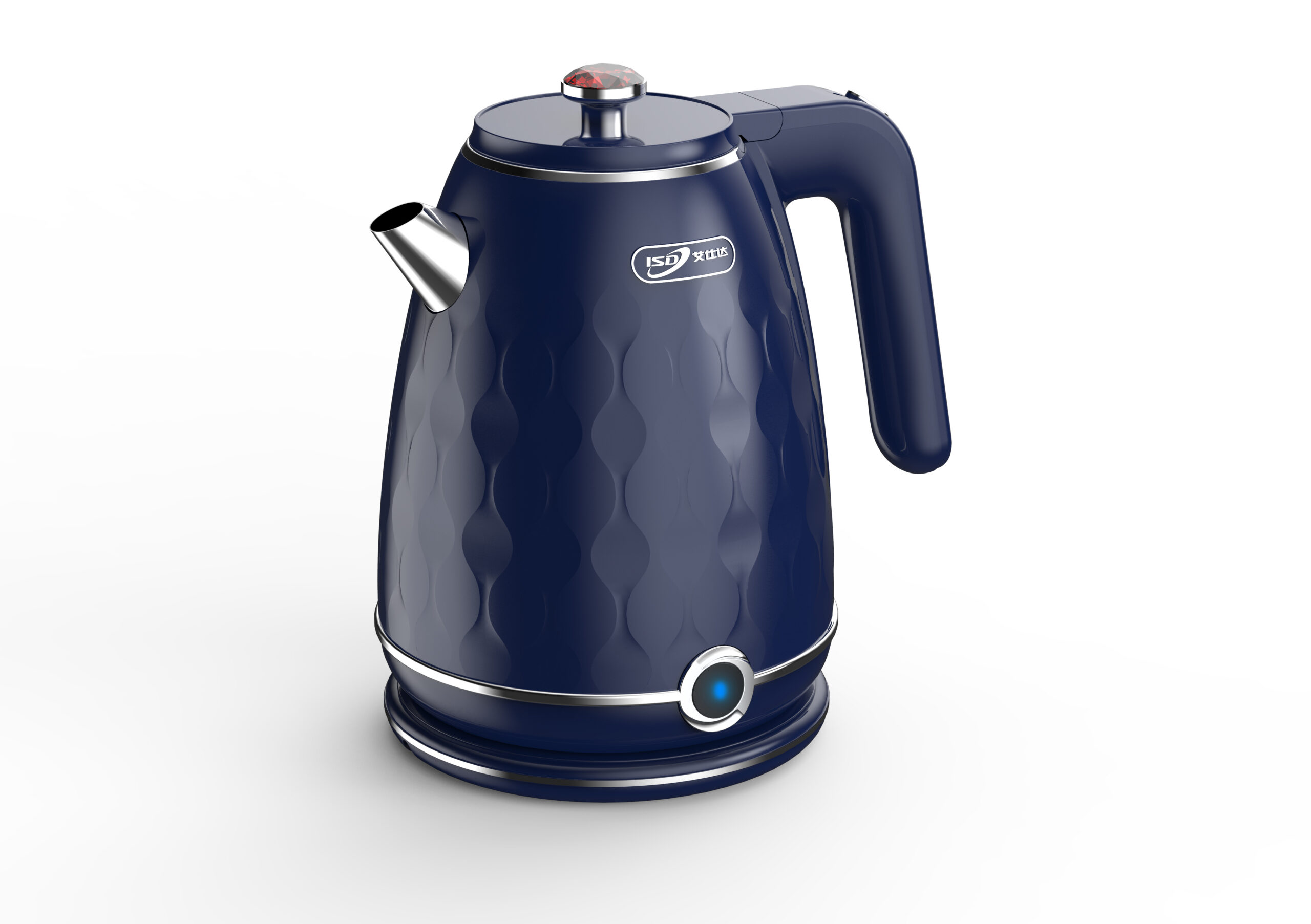
Importers lose more money to certification problems than to bad pricing. A kettle that fails an EU border check does not get a discount. It gets held, re-tested, or sent back — and the importer pays for every day it sits in a warehouse.
CE, RoHS, and LFGB are three different things. Suppliers sometimes blur them together. Buyers should not.
CE: a declaration, not a certificate from Brussels
CE marking means the manufacturer declares the product meets EU safety law. No EU office issues it. The manufacturer — or the importer, if the manufacturer is outside the EU — takes responsibility for it.
For most small appliances, CE rests on two directives:
- Low Voltage Directive (LVD, 2014/35/EU): electrical safety for products rated 50–1000 V AC or 75–1500 V DC. A 220–240 V kettle or rice cooker falls squarely here.
- Electromagnetic Compatibility (EMC, 2014/30/EU): the product must not emit excessive interference, and must tolerate normal interference from other devices.
Behind each directive sit harmonized EN standards — for example, EN 60335-1 for household appliance safety, plus part-2 standards for specific products (kettles: EN 60335-2-15; rice cookers and similar: EN 60335-2-15 and -2-9 families depending on function). Ask which standards the test report cites, not just whether a CE logo exists on the carton.
What to request from the supplier before you pay a deposit:
- EU Declaration of Conformity (DoC) — signed, dated, naming the product, the directives, and the standards applied. A DoC with no standards listed is decoration.
- Test reports from an accredited lab — reports that match the exact model and configuration you are buying, including voltage and plug type.
- Technical file availability — the supplier should be able to produce it on request from a market-surveillance authority. You do not need to read all of it. You need to know it exists.
One trap: a test report for a 220 V model does not cover the 110 V version. Different voltage, different internal wiring and heating element — different report. Same for a different plug or a different heating-element supplier. If the configuration changes, ask whether the report still applies.
RoHS: what is inside the materials
RoHS (Directive 2011/65/EU) restricts ten hazardous substances in electrical and electronic equipment — lead, mercury, cadmium, hexavalent chromium, PBB, PBDE, and four phthalates (DEHP, BBP, DBP, DIBP). Limits are strict: 0.1% by weight for most, 0.01% for cadmium, measured in each homogeneous material.
This matters most where buyers least expect it. Solder joints, plastic housings, power cords, and printed circuit boards in the control panel can all carry restricted substances. A product can pass electrical safety and still fail RoHS on a single component.
Ask for:
- A RoHS compliance declaration for the finished product, plus material-level declarations or test data for high-risk parts (solder, PVC cord, plastic housing).
- Reports based on IEC 62321 test methods, the standard series labs use for RoHS screening and chemical analysis.
- Confirmation that the report covers the current bill of materials. Suppliers change component vendors mid-production. A 2023 report does not prove a 2026 production run.
RoHS exemptions exist for specific applications (for example, lead in certain high-melting-point solders), and they expire or change. If a supplier cites an exemption, ask which one and check it is still valid.
LFGB: the food-contact question
LFGB is not an EU-wide certificate. It is the German food-safety law (Lebensmittel- und Futtermittelgesetzbuch), and “LFGB tested” usually means the food-contact parts passed testing under §30 and §31 of that law, benchmarked against EU Framework Regulation (EC) No 1935/2004 on materials intended to contact food.
For a kettle or rice cooker, the food-contact parts are the inner pot, the lid interior, and any part steam or water touches: 304 or 316 stainless steel, borosilicate glass, food-grade PP or silicone seals. Each material has its own test regime — overall and specific migration limits, sensory testing (no taste or smell transfer), and for metals, release limits for elements such as nickel and chromium.
Why German law shows up on orders bound for France or the Netherlands: German retailers and Amazon.de require it, and many EU buyers treat an LFGB test report as the de facto food-contact passport. A product sold only in Germany needs it. A product sold across the EU benefits from having it, because Regulation 1935/2004 applies everywhere and LFGB testing is one recognized way to demonstrate compliance.
Ask for:
- A test report naming each food-contact material tested — “kettle passed LFGB” without a material list tells you nothing about which parts were tested.
- Migration test results for the actual materials in your product (304 stainless inner pot, silicone seal, PP lid), not a generic report for a different model.
- The test conditions — simulant, temperature, and duration should match real use. A cold-water test does not prove a boiling-water kettle.
One common gap: the heating element plate. It contacts water directly, but some reports test only the pot body. Check the report’s sample description line by line.
The document checklist, in one place
Before confirming an order, collect these five items and file them with the contract:
| Document | What it proves | Red flag |
|---|---|---|
| EU Declaration of Conformity | Product meets LVD and EMC | No directives or standards named |
| CE test reports (accredited lab) | Safety and EMC testing done | Report model or voltage differs from your order |
| RoHS declaration + material data | Restricted substances within limits | Declaration with no test data behind it |
| LFGB / food-contact test report | Food-contact parts are safe | Report covers only part of the food-contact materials |
| Technical file confirmation | Supplier can answer authorities | Supplier cannot say where the file is |
Keep these with the purchase order. If customs or a retailer asks in six months, “we asked the factory once” is not an answer. The file is.
Red flags that should pause an order
- A CE “certificate” issued by an unknown body. Real CE compliance is self-declared with test reports. A glossy certificate from a body you cannot verify adds nothing, and sometimes hides missing reports.
- One report for five models. Reports are model-specific. Shared platforms can share some tests, but the supplier should explain exactly what is shared and what is model-specific.
- Reports older than the current production run with changed components. Ask what changed since the report date.
- “We have all certificates” with nothing attached. Serious suppliers send the DoC and reports before you ask twice. Evasiveness here predicts evasiveness later, when a shipment is stuck.
- A test report in a language you cannot verify, with no lab accreditation number. Accredited labs put their accreditation mark and number on the report. Check it.
From sample to shipment: the testing sequence
Buyers who have never run a certification round often imagine one lab visit and a stamp. The real sequence has five steps, and the buyer is involved in the first two:
- Freeze the configuration. Confirm the exact model, voltage, plug, materials, and colors going into the test. Every change after this point risks invalidating a report.
- Send production-representative samples. Not hand-polished prototypes — units built on the real line, with the real materials. Labs test what you send, and authorities compare it to what you ship.
- Lab testing. Safety, EMC, RoHS screening, and food-contact migration run in parallel at different benches. Expect questions back: a failed EMC emission reading or a migration result near the limit usually means a component change, not a paperwork fix.
- Reports and DoC. The lab issues reports; the manufacturer signs the DoC citing them. Check the model name, voltage, and report date on every page before filing.
- Marking and labelling. The CE mark goes on the product or its rating plate, alongside the importer’s name and address and, where required, the EU authorized representative’s details. The rating plate must match the tested configuration: model, voltage, frequency, power, and manufacturer identification. A container of kettles with a rating plate that says 220 V when the report says 230 V will draw questions at the border for no good reason.
Do this work at sample stage. Testing a finished container is possible, but a failure then means rework or return freight. Testing at sample stage costs the same lab fee and buys you a clean production run.
Who carries the legal risk
This is the part importers underestimate. Under EU law, the importer is responsible for placing only compliant products on the market. If the product fails, the importer’s name is on the customs declaration and the retail listing — not the factory’s.
That does not mean distrusting the factory. It means writing compliance into the contract: the supplier delivers the documents listed above, the product matches the tested configuration, and any component or material change triggers re-testing or at least written notice before shipment. A pre-shipment inspection can check the label, plug, and rating plate against the report. It cannot check RoHS chemistry. The paper has to do that work.
Lead time note: if a needed test does not exist yet, budget for it. Full safety plus food-contact testing for a new kettle configuration typically takes several
weeks, and lab queues lengthen before peak season. Order the testing when you confirm the sample, not when the container is booked.
FAQ
No. CE is the manufacturer’s declaration that the product meets EU directives, backed by test reports. No EU authority issues CE approval for small appliances.
EU Regulation 1935/2004 applies across the EU for food-contact materials. LFGB testing under §30/§31 is the German route to demonstrating compliance, and many EU retailers accept it as evidence even for non-German markets.
Usually not for safety, but check. A new outer-shell material or coating can affect RoHS results, and a new food-contact coating always needs its own migration testing. Ask the lab, not the sales team.
Do not place the order until they do. Without a DoC, you cannot demonstrate compliance to customs or retailers, and you carry the full legal risk as importer.
Check the accreditation mark and number on the report against the accreditation body’s directory (for example, CNAS in China or the relevant ILAC member). Confirm the report number and model match your order.
No. The US market uses different rules entirely — UL/ETL certification and FCC requirements — and a different voltage means different internal components. Treat it as a separate certification project.
Before you confirm your next order, check the documents in this guide against your supplier’s file. Explore our offerings and OEM/ODM services, see a related example such as the AZ-906 Electric Kettle 1.8L Double-Wall, and Request a quote to discuss your specifications.